
Should Writers Use AI?
Before you use it, ignore it, or swear it off forever, here's how to develop your own AI values.

Greetings! If you’re new to the Writing Your Resilience Substack, welcome! I’m Lisa Cooper Ellison, a trauma-informed writing coach, author of this Substack, and your resident story alchemist. If you’ve been here for a while, welcome back. It’s wonderful to be with friends.
In 1992, I attended a sociology class that proved to be eerily prescient. The professor argued that we’d reached a crisis point where technological advancements had outpaced our ability to build values around them. This was five years before most people owned a computer. AOL hadn’t become a household name. Yet, even then, we were in a crisis.
Fast forward to today, where change comes so fast, some tools become obsolete before people have even heard of them.
AI is the most debated among these tools in the writing community. Everywhere I turn, I’m confronted with the following questions: Should you use it? If so, when? What might using AI cost you or others? (Note: If you use AI, don’t apply for the Nebula Award.) Can someone really tell if you’re using it? Fun fact: I ran some freshly crafted, unedited writing through three popular AI detectors. The results ranged from 90% likely human to 50% likely human. Make of that what you will.
It’s tricky for all of us to navigate. I live in an AI liminal space, which sometimes makes it more confusing. On one side are colleagues and friends outside the writing community who love AI and use it for everything. In the middle are my AI-agnostic colleagues, like Jane Friedman, who regularly reports on it through her paid Bottom Line newsletter. On the other side are writers I see online declaring they’ll never use AI. Meanwhile, my clients wonder how to proceed, especially when they too straddle these worlds and have experienced AI’s benefits—or they’ve been told they’ll be left behind if AI isn’t part of their repertoire.
As I considered this, I kept thinking about my former job. Almost twenty-five years ago, I taught sex education in Kentucky under an abstinence-only mandate. Regardless of the questions students asked, I was supposed to respond with, “The only way to truly prevent pregnancies is abstinence.” That’s technically correct. Yet you can guess how well that worked with teenagers whose hormones had other plans.
I’m not here to persuade you to adopt certain AI values. Rather, I’d like you to pause and develop your own. Since this is just one post, there’s a limit to what I can cover. That doesn’t mean I don’t care about other AI-related issues; it’s just that they’re beyond the scope of this newsletter.
For now, let me start with how I use AI and why.
What Guides My AI Use
In my creative and professional life, I care about the following:
Ensuring everyone has access to resources and education
Being fully present with my clients and my life
Protecting my writing time
Feeling proud of what I create
Every time I think about using AI, I asked myself this question: will it ensure access, improve my humanity and presence, protect my time, and help me be proud of what I’ve created?
I’ve used programs like Otter ai for years to quickly generate transcripts for my video courses and podcasts. Transcribing one hour of video by hand takes six to seven hours. I know this because I did it in graduate school. Prioritizing hand-crafted transcripts would mean sacrificing either my time or finances and compromising everything else I care about.
I use Grammarly and other grammar tools, some of which use AI for suggestions, to flag punctuation, grammar, and usage issues. Then I make my own decisions, because flagged doesn’t always mean wrong—especially when the choice is intentional or stylistically unconventional.
I also pay attention to how AI writes. I’ll occasionally have it draft something, not for publication, but to study its tendencies. This is essential because I must be able to recognize how it flattens voices, overuses certain punctuation marks, like the em dash, or creates flowery yet meaningless prose.
I also occasionally use AI for research, having it gather links that I carefully review, because AI hallucinations are real.
Here’s what I’ve learned: AI is seductive. It can spit out answers far faster than your brain and its flattery can make you feel brilliant. It’s why one person I know refers to her boyfriend, ChatGPT. I mean, who doesn’t love a good hack, especially one that gives you gold stars.
To help you decide what works for you, I’ve broken this into three sections based on some of the issues most salient for writers. They were also influenced by questions I’m frequently asked or see online.
Value One: Speed Versus Ownership
How would you feel if AI generated your book—especially if that book won an award? Could you truly claim it as your own?
To uncover what you value here, ask yourself: How do you want to feel about your creative work when it’s finished? Would you rather launch a potentially mediocre project quickly with the help of AI or one that’s entirely your own—and why? How much do you care that the work is entirely your own? What legal problems might you face if AI largely generates your content and then you claim ownership of it? (Not sure? Read about the Shy Girl scandal.)
Once you’ve explored this, write down your speed versus ownership value.
Value Two: Skill Versus Capacity
Speed isn’t the only thing at stake. AI is a tool whose usefulness depends on the skill of the user. If you have a strong instinct for what good writing looks like, you can evaluate what AI produces, taking what you like and leaving the rest. But if you’re still developing your writing chops, your judgment might be less reliable.
But it’s not just about what you haven’t yet learned. The more you offload skills to AI, the more those skills atrophy. Think of it like a language you once learned that gets rusty with disuse, or your ability to navigate without GPS. Those skills don’t disappear overnight. They quietly erode.
Make a list of your established skills and the ones you’re still learning. Which, if any, of those skills do you want to offload to AI? How might that impact your abilities over time? Journal about these issues, then craft your skills versus capacity value.
Value Three: Voice and Originality
Finally, let’s talk about your developing writing voice. Most writers write without taking time to understand what makes their sentences distinctly theirs. If you don’t know what makes your work one of a kind, or trust your ability to craft interesting, vibrant sentences, you’re far more likely to accept whatever AI produces without question.
In fact, a writing professor friend recently told me about a student who wouldn’t submit anything without running it through AI first. She has had to repeatedly show him how the AI-revised version was less effective. He didn’t understand that AI regurgitates language based on prediction. It can’t replace your fresh perspective based on lived experiences.
Does writing from your unique viewpoint take time and effort? Absolutely. Struggling with this process is how we learn. But that perspective and capacity to truly communicate an experience is what separates us from machines. It’s why we’ll always connect with human-crafted work.
So, here are your final questions: What do you value in your writing? What is singular about your writing voice? What is your unique way of seeing the world? How would you know if it’s being diminished by AI feedback?
After answering these questions, jot down your voice and originality value.
Once you’ve explored these topics, see if you can craft an overall values statement or question, like I did at the start of this post.
Wrapping Up
I know I’ve just scratched the surface of this issue. My hope today is simply to start the conversation and provide you with a framework for thinking through what matters to you, so you can recognize when AI serves you and when it doesn’t.
My sincerest hope is that understanding what you value empowers you, and that you use that knowledge and power to always—always—write on.
With love and blessings to you,
Lisa
Your Turn: What’s one value you have around AI? Are there other AI issues writers should consider? Share your answers in the comments. You never know who you might inspire or help.
Thank you for taking the time to read this post; your support means so much to me. If this content resonated with you, here are four simple ways to support this Substack:
Subscribe to this Substack if you’re not already a free subscriber
Like this post by clicking the heart
Restack this post (bonus points if you include a note)
Forward this email to a friend or share the link on social media
Paid Subscriber Perk!

If you’ve been told what it takes to reach readers, and despite applying these “best practices” feel exhausted, invisible, or quietly resentful about your efforts, this webinar is for you. In this course, we use two foundational elements of Human Design — your Strategy and your Profile — coupled with somatic strategies and planning time to help you build a sustainable author platform filled with joy and flow.
This is a paid subscriber exclusive.
Not a paid subscriber? A one-month subscription costs $8.00.
The Latest Episode of Writing Your Resilience:
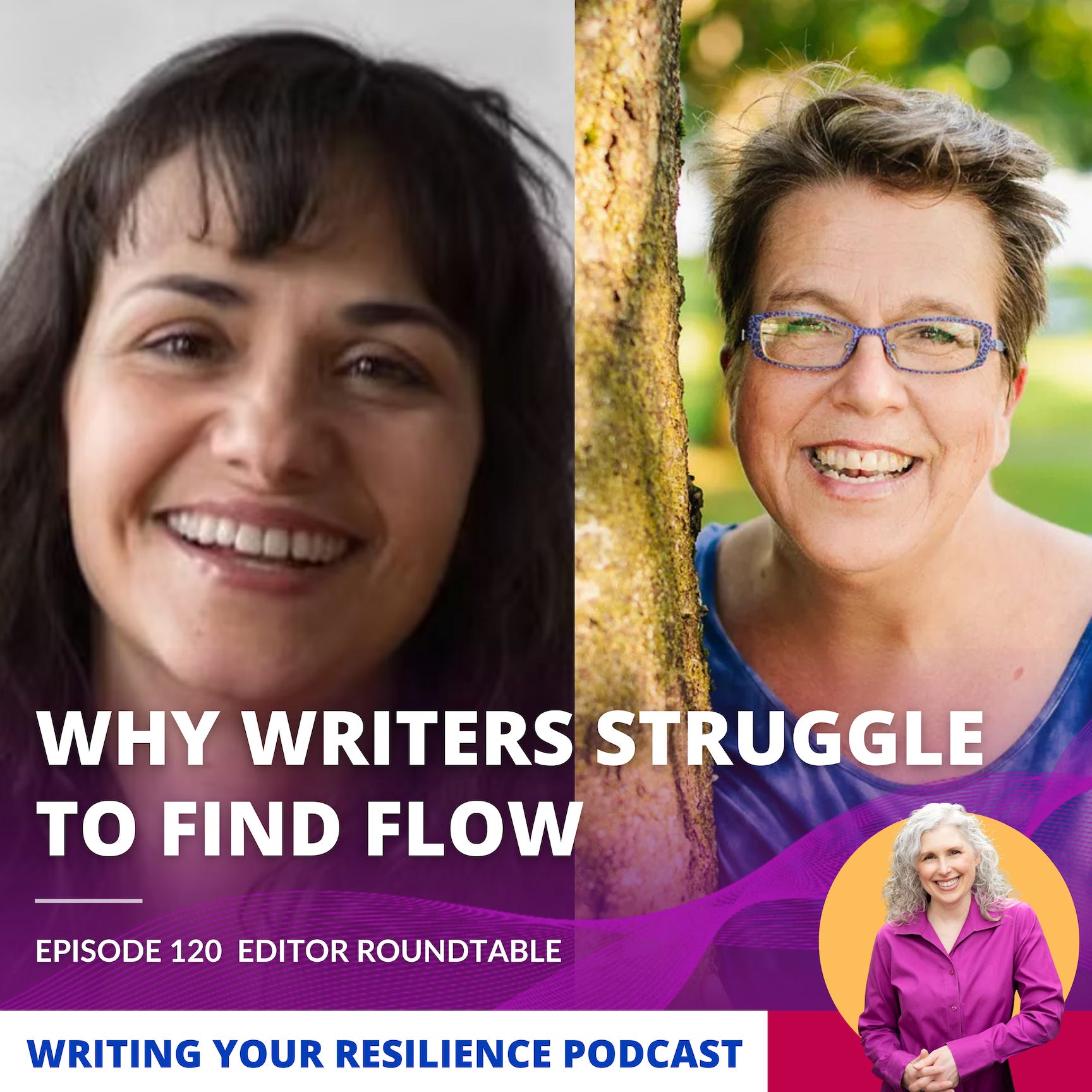
This week, I’m joined by Lynn Shattuck and Sarah Chauncey for a lively conversation on the Law of Increasing Flow and how to turn your creative desires into a satisfying writing practice.
Build Better Scenes
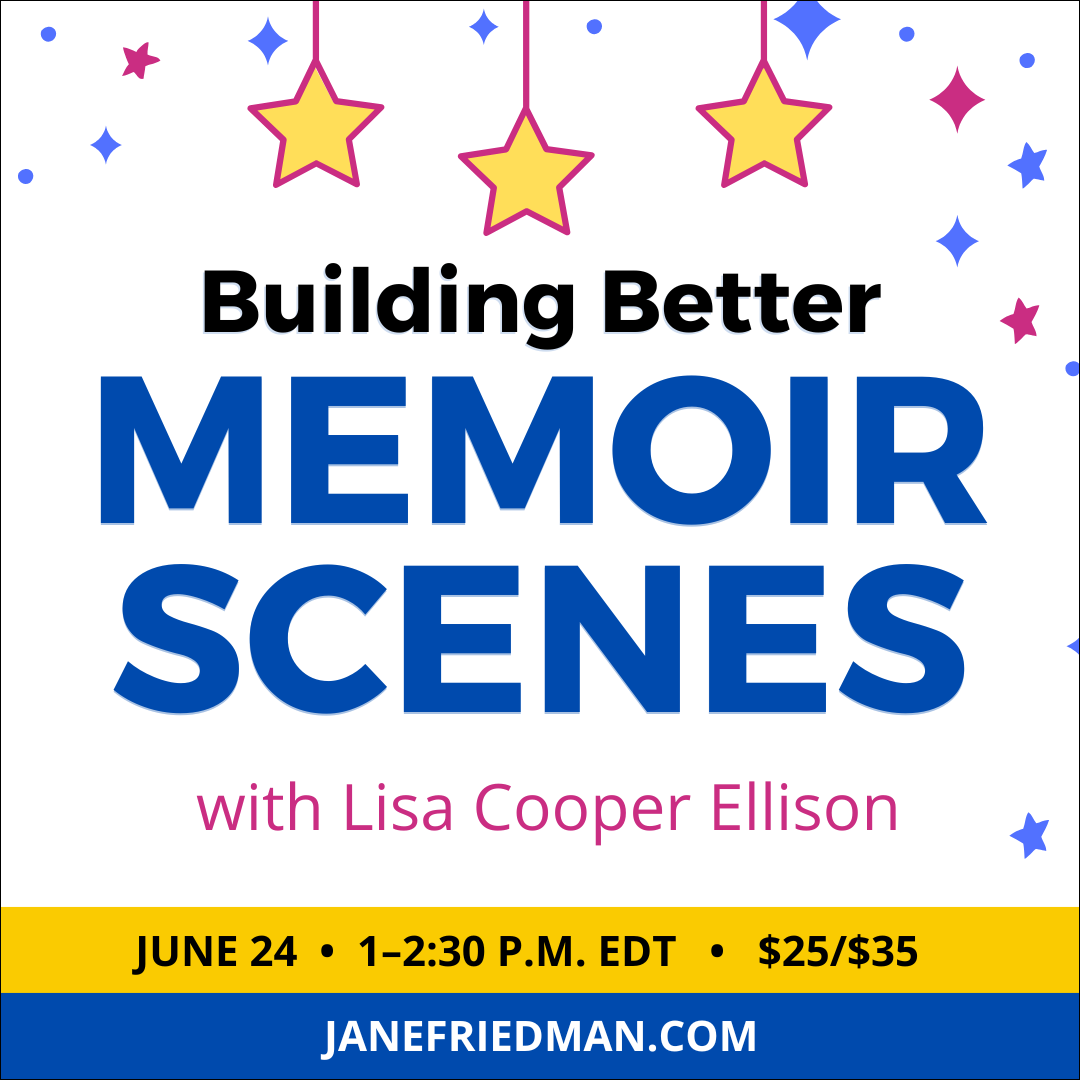
This June, I’m teaming up with Jane Friedman for a scene-building clinic where you’ll learn the nuts-and-bolts of great scene writing and learn how to capitalize on components like action, dialogue, and narration to create something with a beating heart that captivates readers. Best of all, you’ll see how to apply these skills during the workshop portion of this session.
Red-Hot Writers
Are you a subscriber with a May publication? Reply to this email with the title and link so I can share your writing with our community. The deadline for this month’s Red-Hot Writer List is 5/22/26.
While I will link to pieces that promote a thoughtful dialogue between humans, I will not publish anything that promotes hate or demeans or denigrates marginalized communities
Sex in your post is okay, but I don’t promote erotica
Posts to your blog or personal Substack and marketing-focused posts do not qualify
Milestone Makers
Are you a subscriber who’s reached a May milestone? Reply to this email so we can celebrate your success. Milestones could be birthdays, reaching a specific goal, or hitting a benchmark on a long-term project. The deadline for this month’s Milestone Makers List is 5/22/26.
If you’ve read this far, thank you. You can support this newsletter and yourself with quarterly Ask Me Anything sessions and occasional Writer’s Support sessions by becoming a paid subscriber. My next Ask Me Anything session is scheduled for Wednesday, June 17, 2026. As a paid subscriber, you can also attend Build an Author Platform that Aligns with Your Design and Nervous System on May 27th.
I used AI to help me understand the central question I want to write about. There are so many ways I could write about the events as a cancer survivor, an invest survivor, a woman who traveled the world with a family of four, etc. how to shape a long an interesting life that works help someone else who is struggling with a similar issue. I money story and got a helpful outline for how I might write it that would find an audience. I stopped there. All the wrong, scene choices, development will be mine. The AI suggestions will help me know what doesn’t belong.
Well said!!!